
EVAPORATIVE COOLING TO REFRIGERATED AIR
Refrigerated-Air Conversion in El Paso, TX
Replacing a swamp cooler with a true air conditioning system — what the work involves, what has to be evaluated first, and what changes once it is done.
Why conversions come up in El Paso
Evaporative cooling suits a dry desert climate and has kept El Paso properties comfortable for decades. Its weakness shows up in late summer: once monsoon moisture arrives, an evaporative cooler has far less capacity to work with, and the same unit that felt fine in June can leave the house warm and damp in August. Property owners also weigh the open-window operation, the water use, seasonal pad and pump service, and the dust that comes in with the airflow.
A conversion answers those issues by replacing the cooler with a closed refrigerated system. It is a real construction project, not a swap, and it is worth understanding before committing.
How the two systems actually differ
- Air path. A cooler pushes outdoor air through the house and out an open window. Refrigerated air recirculates indoor air in a closed building.
- Humidity. A cooler adds moisture; refrigerated air removes it, which is what makes late-summer comfort noticeably different.
- Consistency. Refrigerated capacity does not collapse when outdoor humidity climbs.
- Utilities. Refrigerated air uses more electricity and far less water.
- Service. Pads, pumps, bleed-off and winterizing are replaced by filter changes, coil cleaning and an annual inspection.
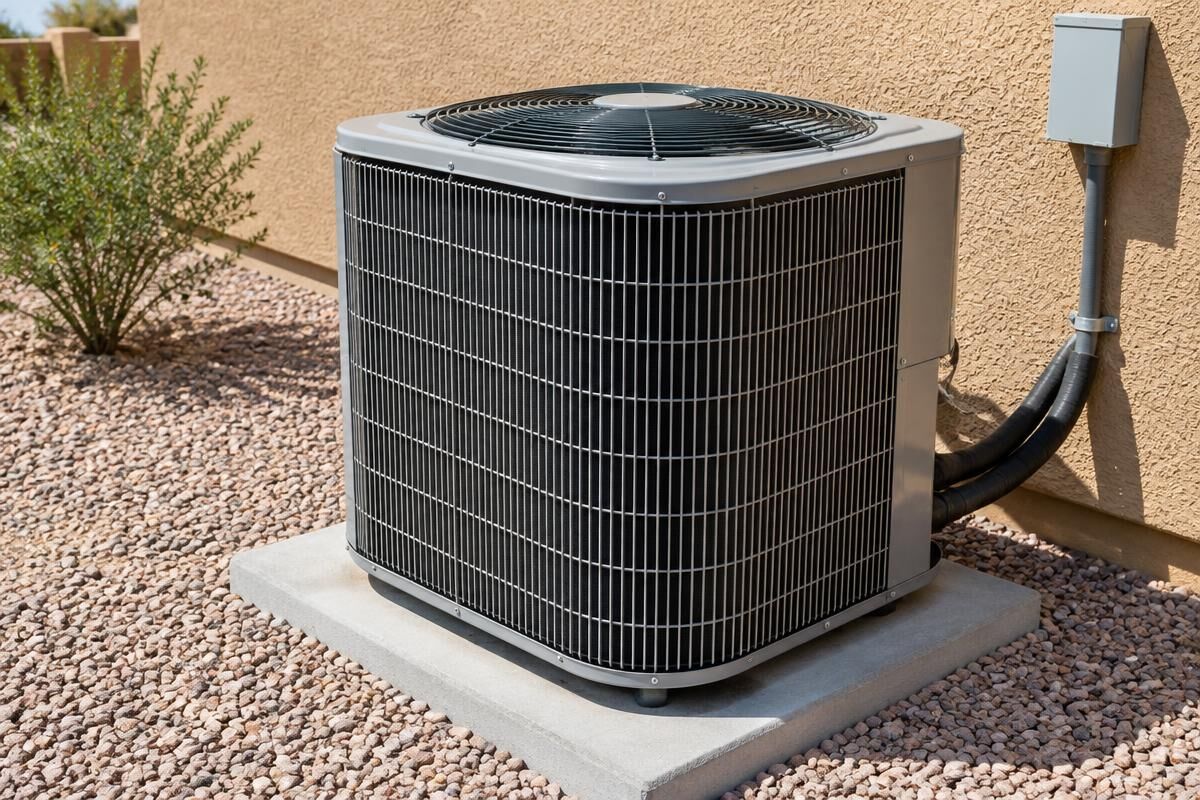 Outdoor condensing unit
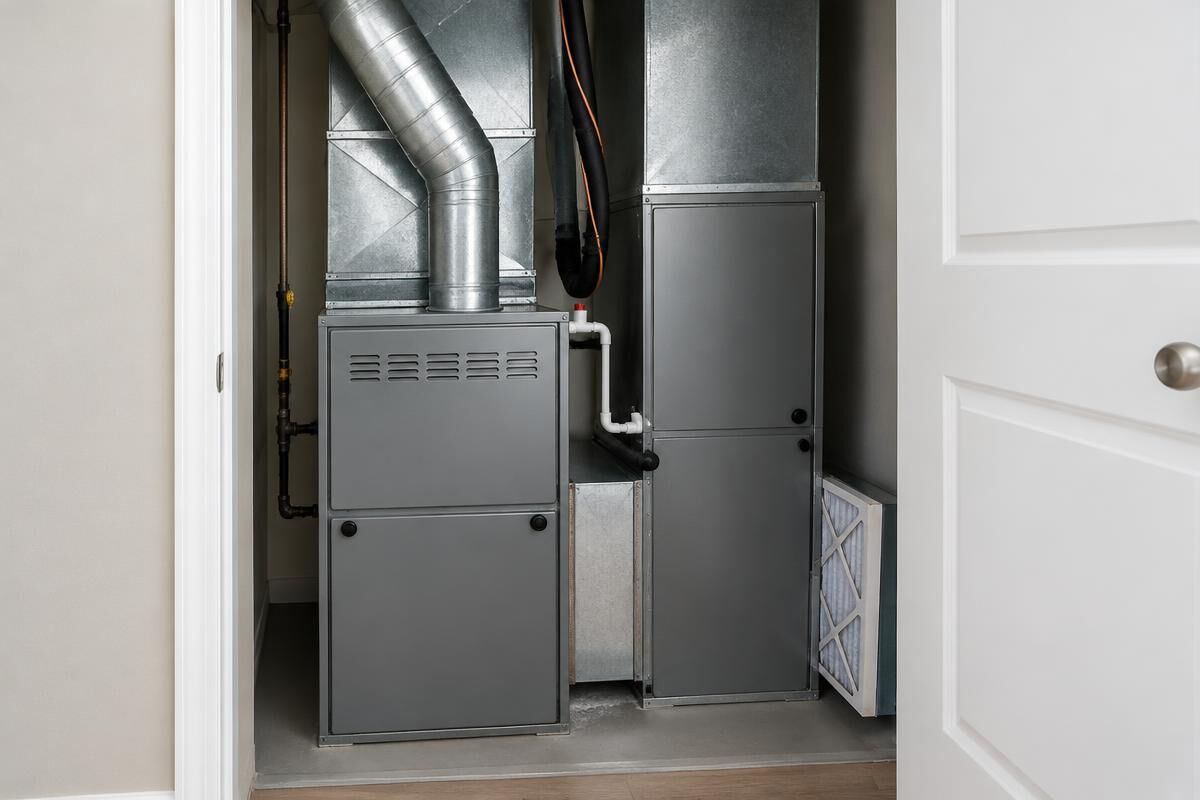 Indoor air handler and coil
Electrical and ductwork evaluation
Two things decide the real scope of a conversion. The first is electrical: a refrigerated system draws considerably more current than a cooler, so the service, panel capacity and circuit for the new equipment all need assessment. Where a panel is at its limit, that work belongs in the plan and the budget from day one.
The second is the duct system. Duct originally installed for evaporative airflow is not always sized, sealed or routed the way a refrigerated system needs, and return air is frequently the limiting factor. A thorough evaluation identifies what can be reused, what needs modification and what should be replaced.
A typical conversion process
- Site evaluation — building, duct, equipment locations, electrical.
- System sizing based on the property, not on the old cooler.
- Written scope covering equipment, duct work and electrical work.
- Removal of the evaporative cooler and closing of the opening it used.
- Duct modification or replacement where the evaluation calls for it.
- Installation of the outdoor condensing unit and indoor air handler and coil.
- Refrigerant lines, condensate drainage, electrical connections and thermostat.
- Commissioning, airflow and charge verification, and a walkthrough of the finished system.
Planning considerations
Conversions are easier to schedule outside the peak of the cooling season, when the property is not depending on the cooler day to day. Consider where the outdoor unit will sit relative to bedrooms and patios, how the indoor equipment will be accessed for service, and whether any remodeling already planned should be coordinated with the duct work.
Related electrical work needed to support the new equipment is worth discussing up front with whoever you request help from.
Conversion Questions El Paso Homeowners Ask
What is the practical difference between evaporative cooling and refrigerated air?
An evaporative cooler cools by evaporating water into the air it delivers, so it adds moisture and depends on dry outdoor conditions. Refrigerated air uses a closed refrigerant cycle to remove heat and moisture from air that is recirculated inside the building, so its performance does not fall away when outdoor humidity rises.
Can any house be converted, or does it need to be a specific type?
Most properties can be converted, but the project scope varies. What changes it is the existing duct layout, whether there is a suitable location for indoor and outdoor equipment, and whether the electrical service and panel can support the new load. That evaluation typically happens before any price is quoted.
Will utility bills go down after converting?
Not necessarily. Refrigerated air uses more electricity than an evaporative cooler while using far less water, and the net cost depends on the equipment, the building and how it's run. A reputable technician will explain what the system draws rather than promise a specific saving.
Do the windows still need to be open?
No. Evaporative cooling depends on air moving through the building and out an open window. A refrigerated-air system recirculates air in a closed building, so the house stays shut and the system controls both temperature and humidity.
What maintenance does the new system need?
Generally regular filter changes, an annual inspection before the cooling season, condenser coil cleaning, and a drain check. Winterizing and pad replacement for the old cooler are no longer needed.
Thinking about converting?
Describe the property, including the duct, the equipment locations and the electrical panel, and request a scope you can plan around.