
AIR CONDITIONING INSTALLATION
AC Installation in El Paso, TX
What goes into sizing and installing a new or replacement air conditioning system for an El Paso property.
New systems and replacements
A full cooling system installation for an El Paso home or business — whether a first-time installation in a property without central air or a replacement for equipment that has reached the end of its service life — typically includes the outdoor condensing unit, the indoor air handler or furnace coil, refrigerant lines, condensate drainage, electrical connections, thermostat setup and commissioning of the finished system.
Sizing and the El Paso cooling load
Cooling demand here is driven by long stretches of high daytime temperatures and intense sun exposure, followed by a monsoon period when humidity rises. That combination rewards equipment that is matched to the building rather than simply matched to whatever was there before.
Sizing should account for conditioned square footage, ceiling heights, insulation, window area and orientation, shading, and the capacity of the existing duct system. Where a previous system was oversized — a common finding — the replacement can be corrected rather than repeated.
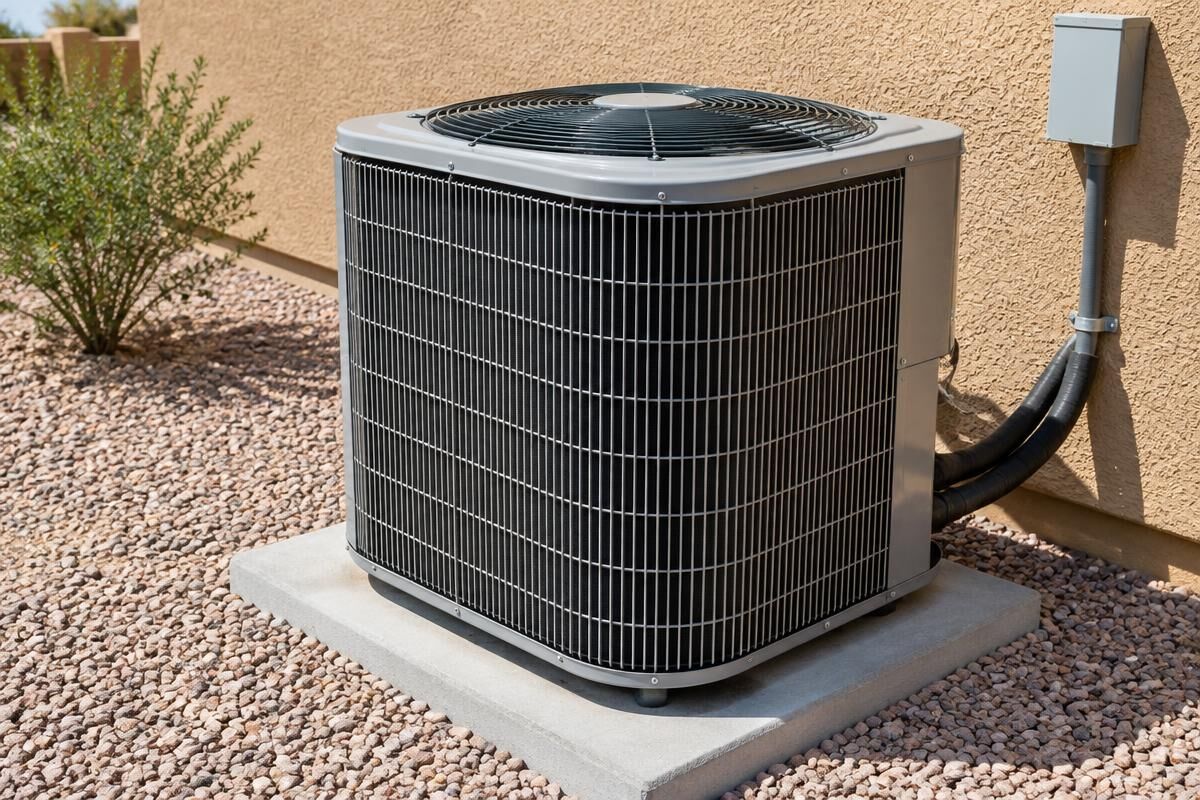 Outdoor unit set and connected
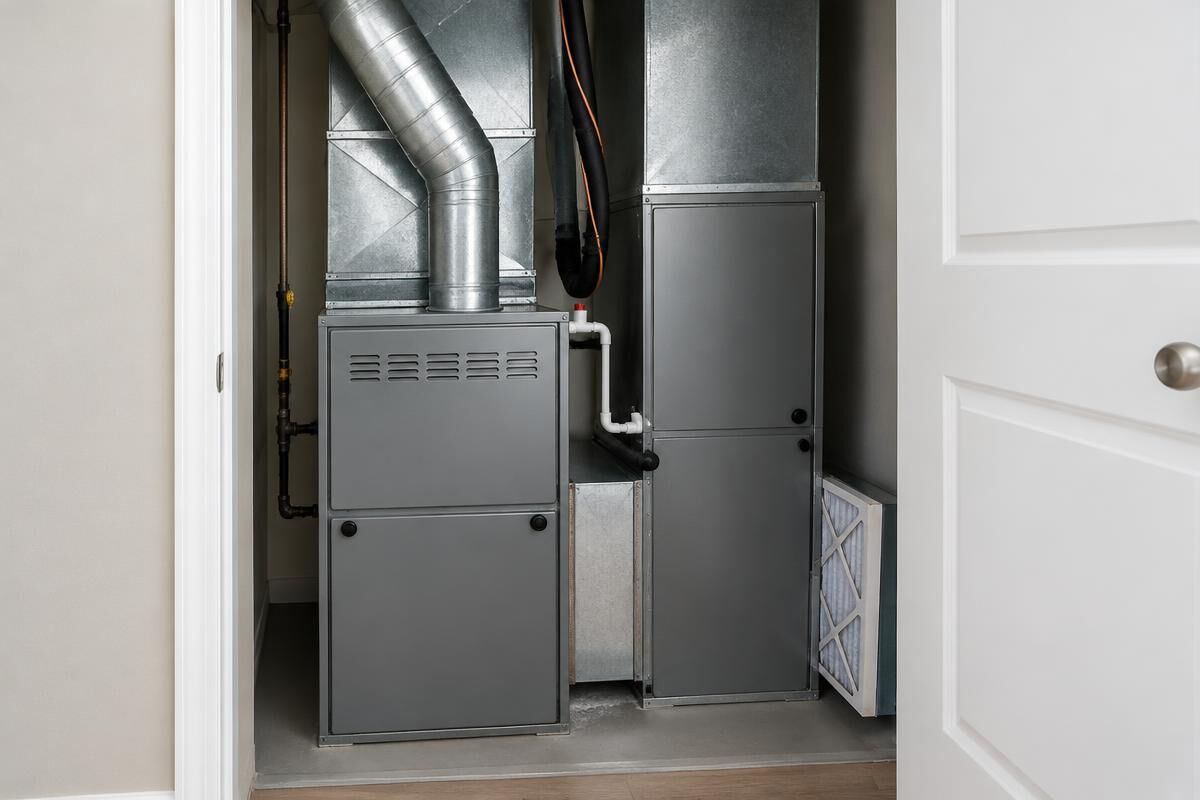 Indoor equipment installation
Ductwork and efficiency
Efficiency ratings describe the equipment, not the installation. A well-rated system connected to leaking or undersized duct will not deliver what the label promises, so the distribution system is worth including in the conversation from the start. A thorough evaluation checks duct condition, sizing, connections and return-air capacity, and flags when duct repair or modification should be part of the project instead of a surprise later.
A typical installation process
- Site visit. A technician looks at the property, the existing equipment and duct, electrical service, and where equipment can reasonably be placed.
- Written options. You should receive the recommended configuration and what it includes, so quotes can be compared like for like.
- Removal. The old equipment is disconnected and taken away.
- Installation. New equipment set, refrigerant lines and drainage run, electrical and thermostat connections completed, duct connections sealed.
- Commissioning. Charge verified, airflow checked, operation tested, and the site left clean.
- Walkthrough. You should be shown the thermostat, the filter location and what maintenance the system needs.
Questions worth asking any installer
- How was the system size determined for this specific building?
- Was the existing ductwork inspected, and what did it show?
- Does the quote include electrical work, permits and disposal?
- What exactly is being replaced — the full system, or the outdoor unit only?
- Who performs the work, and are they licensed for it?
Repair or replace
Replacement usually earns its cost when the compressor has failed, when repairs are becoming routine, or when the equipment is old enough that parts and refrigerant are difficult to source. A newer system with a single failed component is normally worth repairing — see AC repair in El Paso. If the property currently uses an evaporative cooler, the project is a refrigerated-air conversion rather than a straight changeout.
AC Installation Questions
How is the right system size decided?
Size should come from the building, not from the label on the old unit: square footage, ceiling height, insulation, window area and orientation, and the condition of the duct system. An oversized system short-cycles and leaves the air clammy; an undersized one never catches up on a July afternoon.
Can existing ductwork be reused?
Often yes, but it should be inspected first. Leaking, undersized or disconnected duct can undercut any new equipment, so the distribution system is typically evaluated as part of an estimate rather than after installation.
How long does an installation take?
A straightforward residential changeout is commonly completed in a day. Work that involves duct modification, electrical changes, a different equipment location or commercial access takes longer, and a technician should outline the expected schedule with the estimate.
Do HVAC companies install commercial as well as residential systems?
Many HVAC companies install both residential systems and commercial equipment, including packaged and rooftop units. Ask about the provider's experience with your property type when you request help.
Planning a new or replacement system?
Describe the property, the existing ductwork and how you use the space, and request help comparing your options.