
AIR CONDITIONING REPAIR
AC Repair in El Paso, TX
Learn about common cooling problems for El Paso homes and businesses, and request help from a qualified HVAC technician.
Common problems technicians troubleshoot
An El Paso cooling season runs long and hot, and equipment here works harder than the same unit would almost anywhere else in Texas. Many service calls start with one of a handful of symptoms:
- System blowing warm air. Refrigerant loss, a failed compressor or capacitor, a fouled condenser coil, or a control fault.
- Weak airflow at the registers. Restricted filters, a failing blower motor, collapsed or disconnected duct, or a coil that has started to ice.
- Unusual noises. Grinding, screeching, buzzing at start-up or rattling panels — each points at a different component.
- Short cycling. The system starts and stops in quick bursts, which can be a control, capacity, airflow or thermostat placement issue.
- Frozen components. Ice on the indoor coil or the refrigerant line, usually caused by airflow restriction or low charge.
- Thermostat-related problems. Wiring faults, programming, failed thermostats and systems that respond to nothing.
Both residential and commercial cooling equipment — a home split system or a small-business packaged unit — generally go through the same diagnostic process.
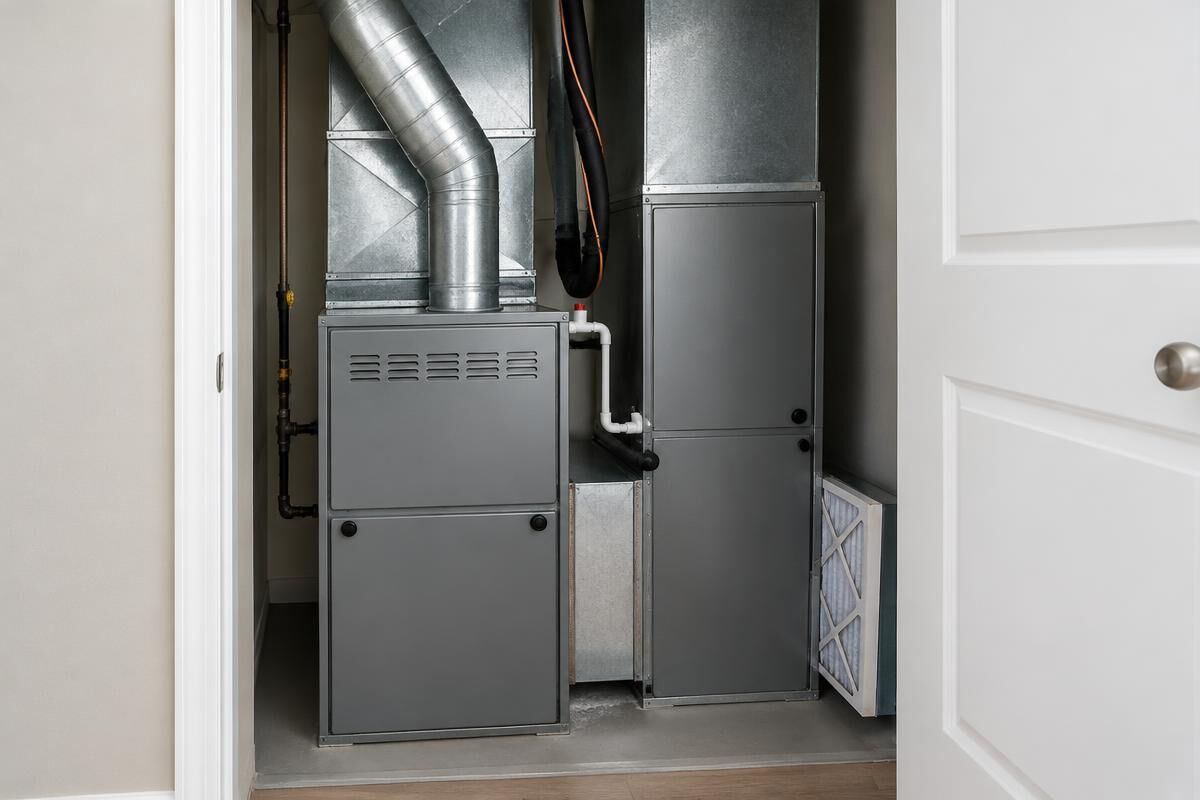 Indoor equipment access
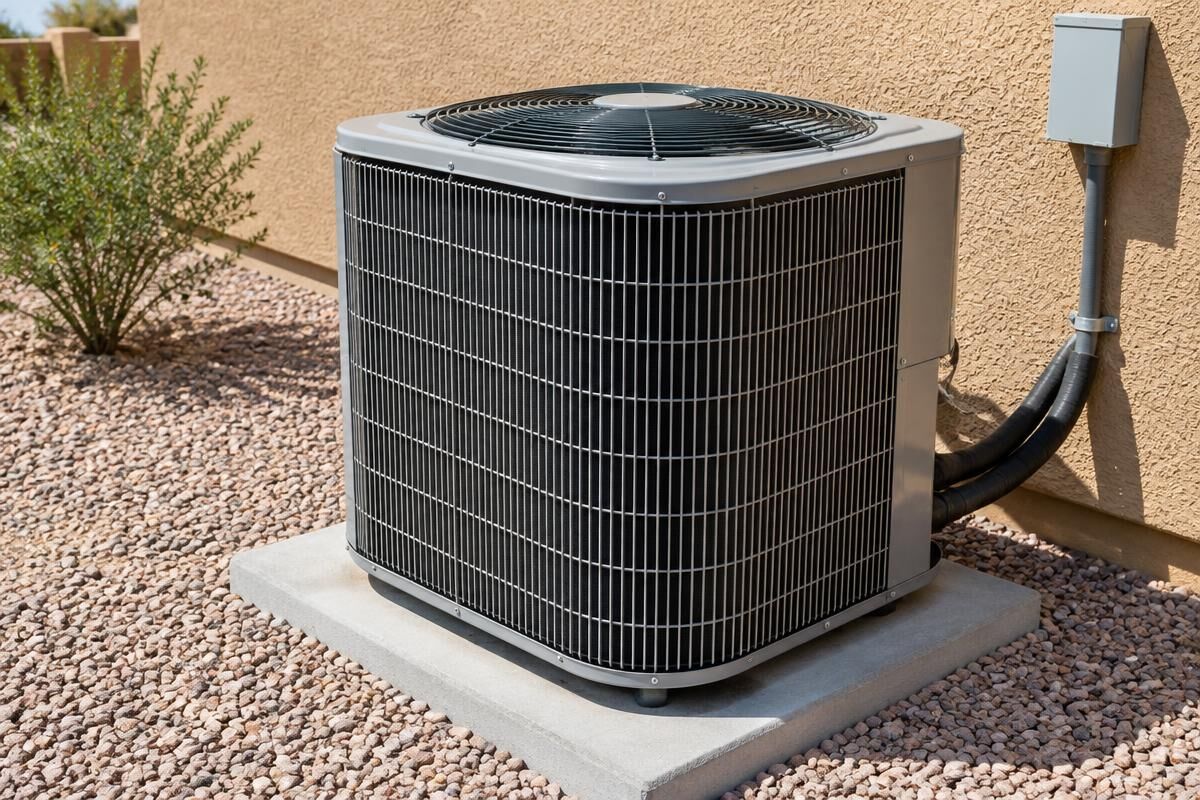 Outdoor condensing unit
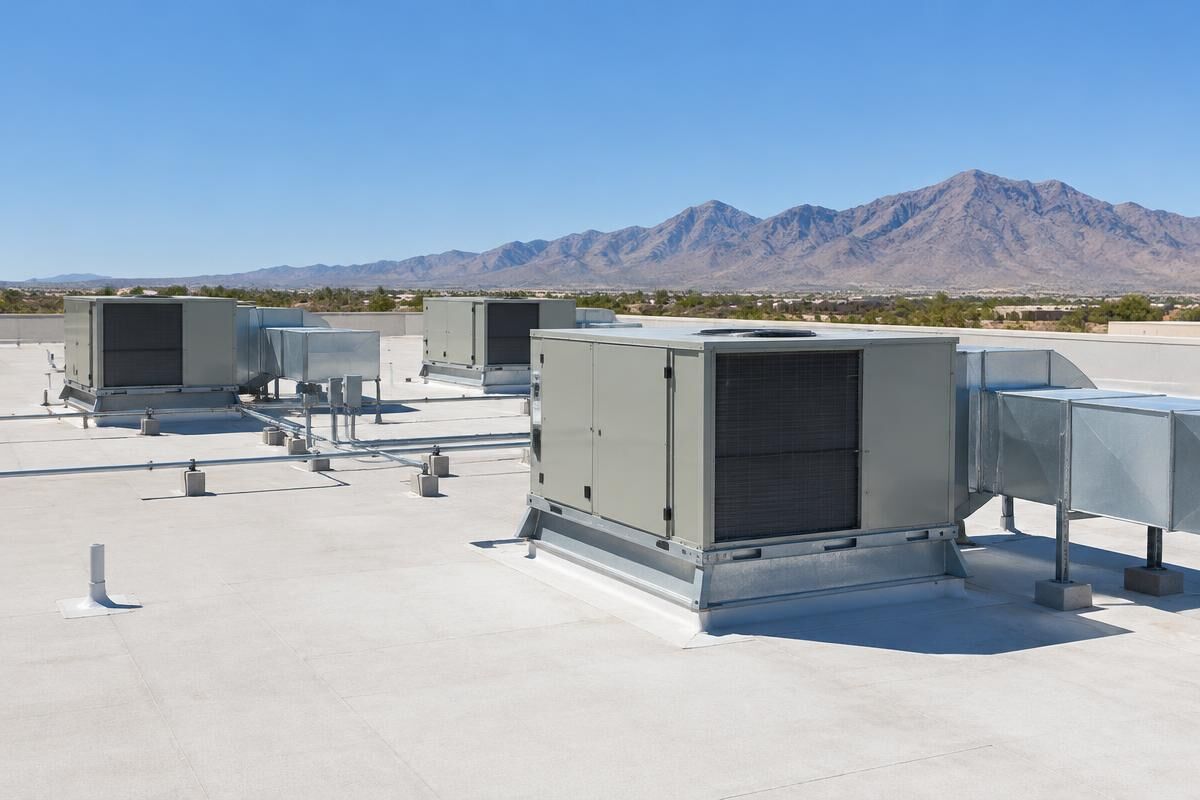 Commercial rooftop unit
What to check before requesting help
A few of these solve the problem outright, and the rest give a technician a head start:
- Confirm the thermostat is set to cool and below room temperature.
- Replace a visibly dirty air filter — dust loads here are heavy.
- Check the breaker for the indoor and outdoor equipment. If it trips again after a reset, stop and leave it off.
- Clear plants, dryer lint and yard debris away from the outdoor unit so it can reject heat.
- Note when the problem happens — only in the afternoon, only at start-up, or all the time. That detail narrows the diagnosis.
What a typical service visit covers
A technician usually starts with the symptoms you observed, then inspects the equipment itself: thermostat operation and wiring, filter and airflow, indoor coil and blower, refrigerant pressures and temperatures, electrical components such as contactors and capacitors, condenser coil condition, and the drain. Once a fault is identified, a reputable technician explains what failed, what the repair involves and what it costs before proceeding.
If a part has to be ordered, that should be communicated up front rather than leaving the visit open-ended.
When repair stops making sense
Repair is usually the right call on a system that is holding up well otherwise. Replacement deserves a serious look when the compressor has failed, when the repair cost approaches a meaningful share of a new system, when the same component keeps failing, or when the equipment uses a refrigerant that has become expensive to source.
Most technicians can quote the repair either way. If replacement is the better value, see AC installation in El Paso, or read about a refrigerated-air conversion if the property still cools with an evaporative cooler.
AC Repair Questions from El Paso Property Owners
My AC is running but the air is warm. What is usually wrong?
Warm air with the system running usually points to a refrigerant problem, a failed compressor or capacitor, a dirty condenser coil, or a thermostat set to the wrong mode. A technician measures pressures and temperatures at the unit to tell those apart rather than guessing.
Should I turn the system off while I wait for a technician?
If the unit is iced over, blowing warm air, tripping a breaker or making a grinding or screeching noise, switching it off at the thermostat is usually recommended. Running a system in those conditions can turn a small repair into a compressor replacement.
Do HVAC companies repair systems they did not install?
Most HVAC companies service equipment they did not install, regardless of make or model. Ask about this when you request help.
How do I know whether to repair or replace?
A technician typically weighs the age of the equipment, the cost of the repair against the cost of a replacement system, the refrigerant it uses, and whether the same component has failed before. Request an inspection to get both numbers before deciding.
Cooling problem you want looked at?
Describe what the system is doing and request help with your HVAC needs.